Categories
(The 5 Key Principles)
AI Will Require a Redesign of Social and Economic Rules
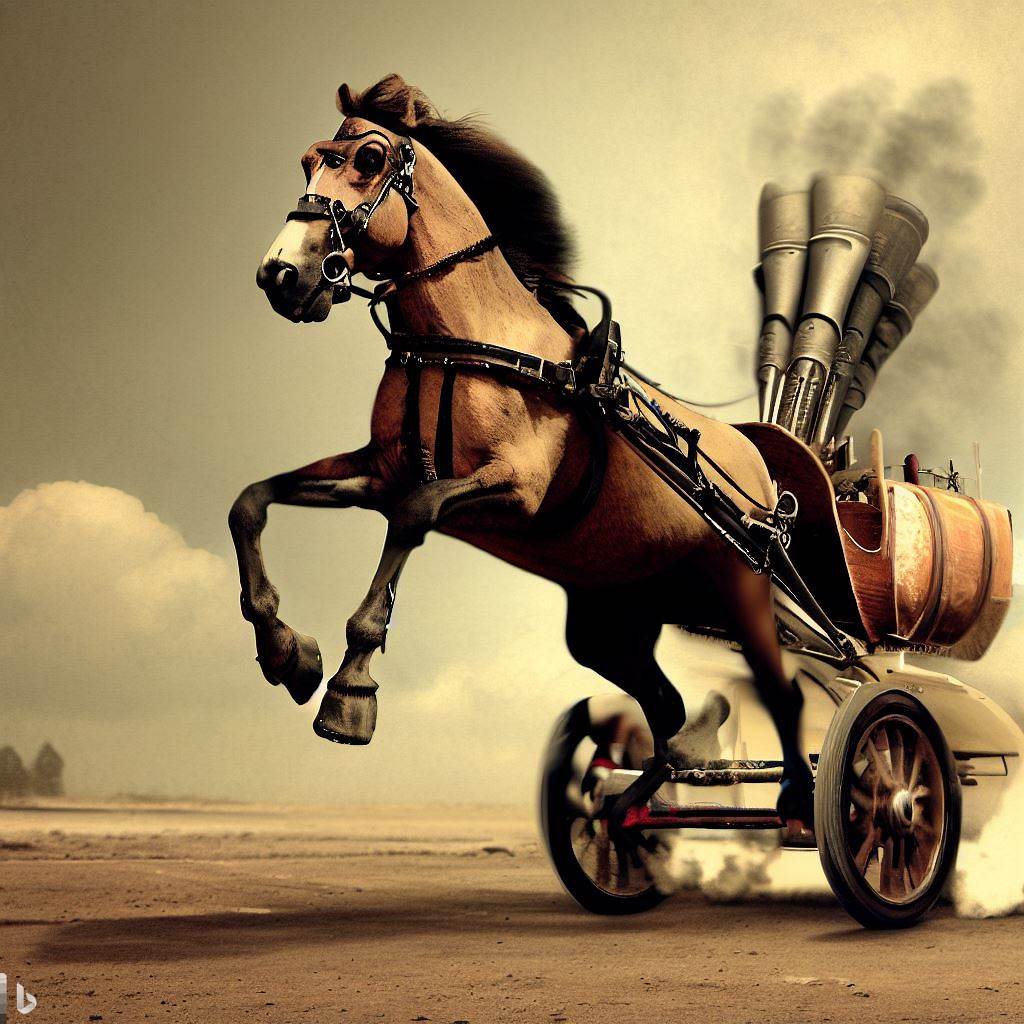
With the rise of AI, it appears that two main camps have formed: a) those who believe that we will all meet our demise, and b) those who think that nothing will happen because the world has weathered technological progress before, and look how well we’re doing.
Unfortunately, both camps are incorrect. No … I’m just kidding. I believe that camp A is much closer to being correct. I am not sure about “we”, but I believe that at least our current socioeconomic and societal structures will face mortal challenges in the next 25 to 50 years.
Yes, it is absolutely true that humanity has experienced exponential technical advancements. In just under 200 years, we’ve transitioned from horses to engines, from mechanical devices to computers, and from computers to supercomputers, and the world didn’t come to an end. This seems to be an argument for the pattern continuing in the not-so-distant era of AI. However, I believe that proponents of this argument overlook an essential component—the capacity of the human brain.
Here’s the problem: When the engine was invented, and there were concerns that horse-and-carriage farmers would lose their livelihoods, that didn’t happen because those farmers started working in factories. Jobs were indeed lost, but new ones were created. Next, with the advent of computers, there were fears that accountants would lose their jobs. Many did, and jobs were lost, but we also witnessed the creation of many other jobs in computer manufacturing and software development. This historical pattern may suggest that history will always repeat itself, but let’s consider the intellectual capabilities required for the newly created jobs.
Without intending to insult anyone, our brains do have limitations. While almost everyone on this planet could walk behind a horse, the vast majority could also work on a factory production line. Humanity did possess the intellectual capacity to adapt to progress. Similarly, writing code is certainly more intellectually challenging than adding numbers on paper, but from my experience, while attending high school where all my colleagues had to write software code regardless of their talents, about 90% of them managed to do at least a decent job, while perhaps only 20% excelled. Still, the majority of humans could write some software if they wanted to.
AI is different, though. We will lose jobs because AI will be capable of performing them much better, faster, and cheaper. But what jobs will be created? Will all the data-entry clerks, and truck drivers, and factory workers, and even teachers who lose their jobs be able to train themselves to become specialists in cybersecurity, AI programming, or quantum computing development? Of course not. My argument is that not only these people – and I will gladly include myself among them – but also their descendants will face significant limitations in accessing these newly created jobs because they will demand much higher intellectual capabilities that the human gene pool does not naturally possess. Our intelligence, as a species, can be charted on a bell curve, but that curve remains nearly static. The physical capabilities of our brains have virtually remained unchanged over the past 100, 1,000, and even 10,000 years, while our job requirements increasingly demand more.
This is why I believe that AI will present social, economic, and political challenges. We are pushing technological progress beyond our natural physical abilities, and I find it difficult to envision the next 50 years as a repetition of the past.